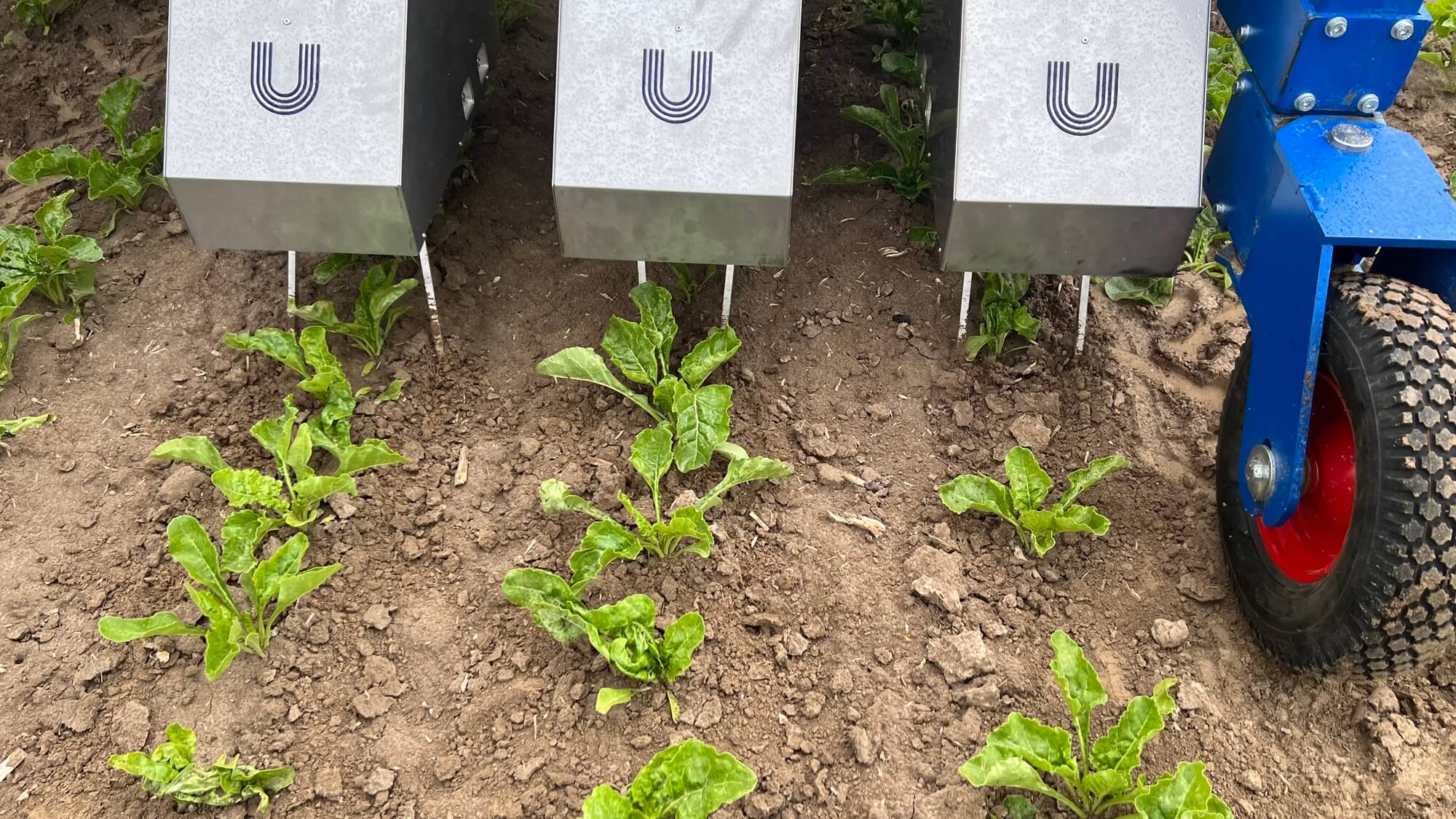
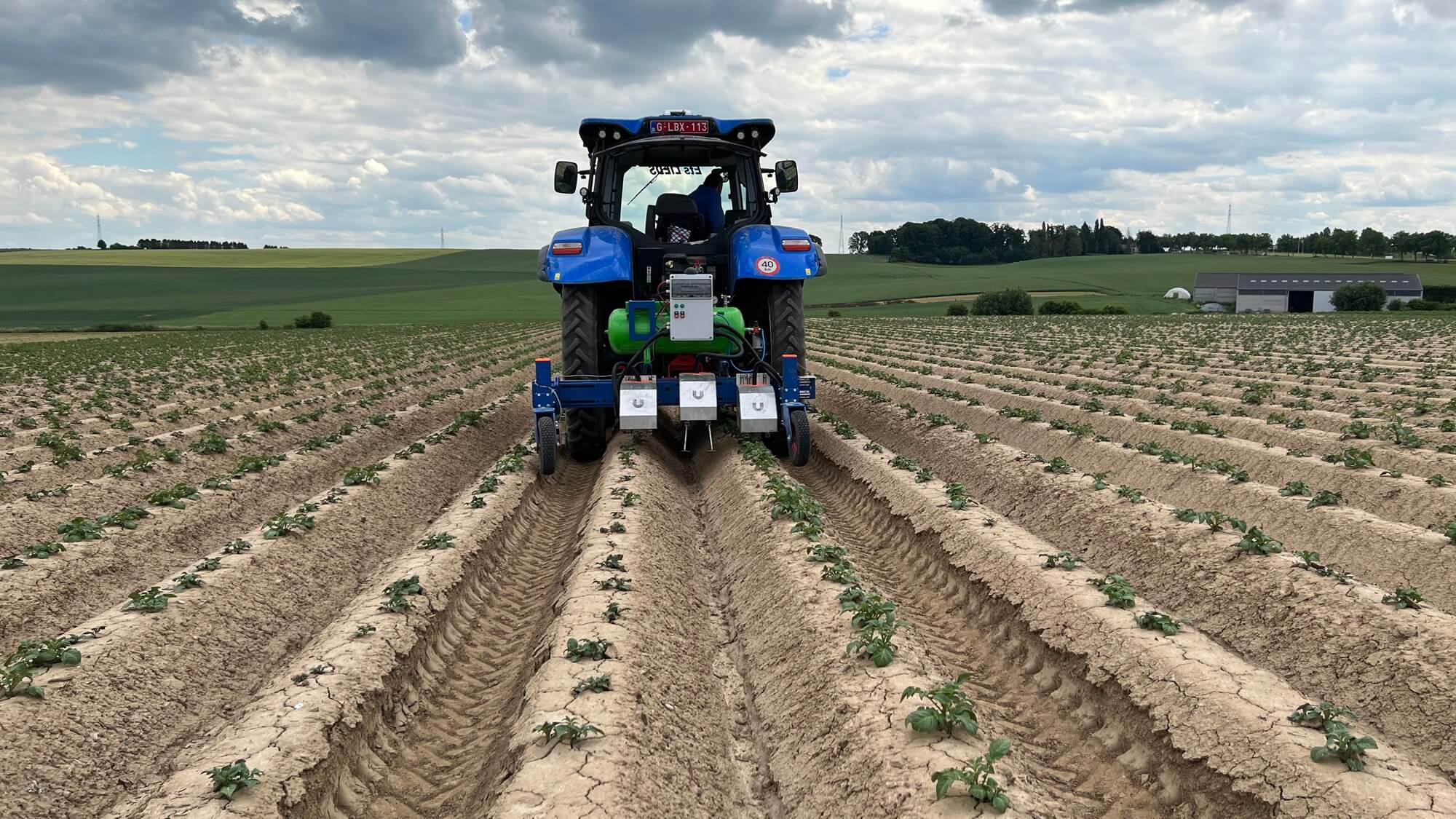
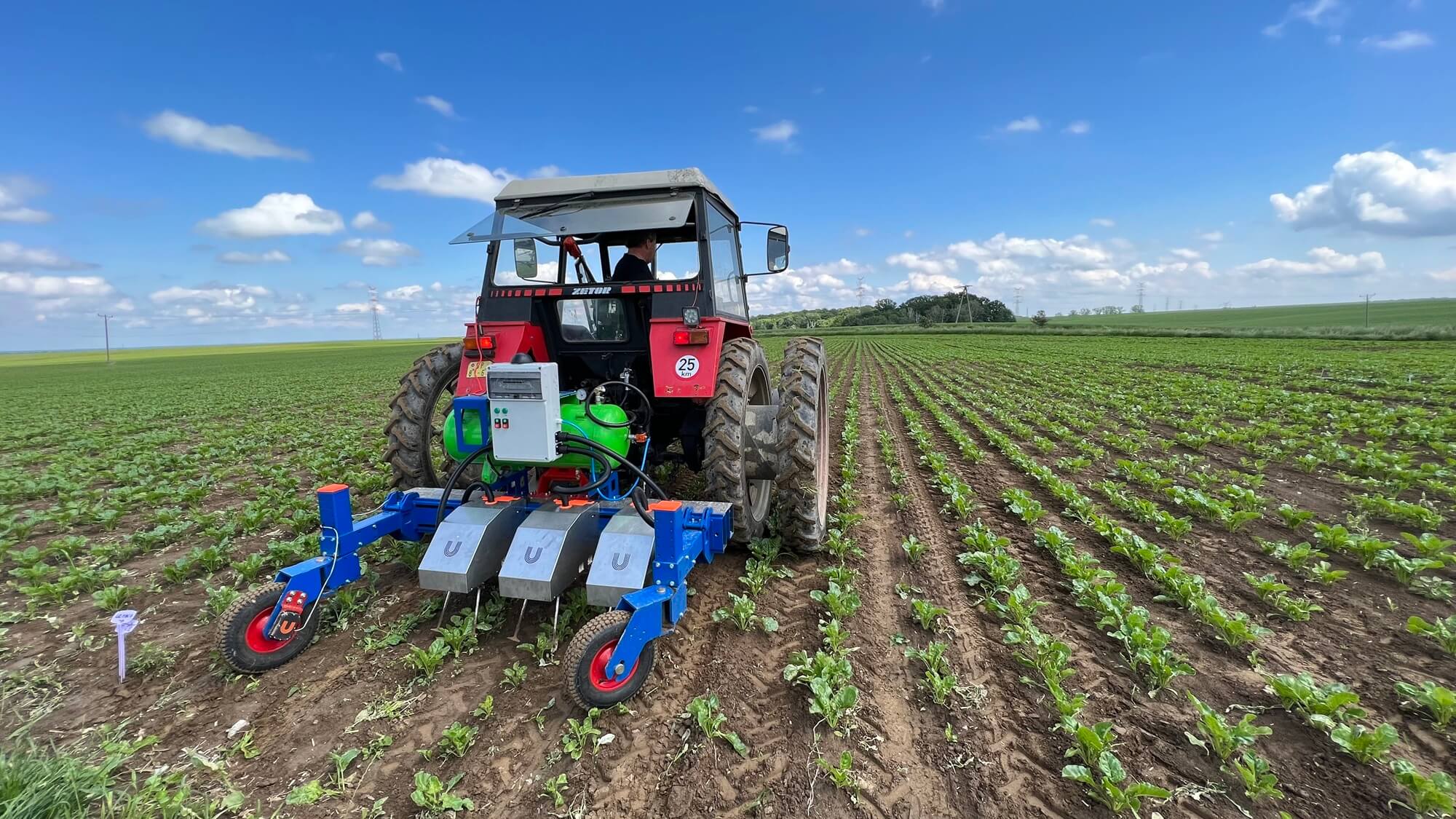
Europe accounts for the largest share of our business, particularly Austria, Germany and Switzerland. We also operate in the United Kingdom, the Netherlands and Belgium, and we are gradually expanding into France, Italy and Spain.
Our technology has also reached Ukraine, Japan, Canada and the United States through machines manufactured by our partners. Our primary focus is not on manufacturing complete machines, but rather on developing camera systems.
Is the technology difficult for tractor operators to use?
As with any other piece of equipment, some basic training is necessary. We have manuals available, but of course, hardly anyone reads them. That is why we usually spend about half a day in the field with a new customer, showing them how everything works. After that, they can generally operate the system on their own.
It is not rocket science. Operators can gradually explore additional settings and improve their skills, but the basic controls are fairly intuitive.
Artificial intelligence seems to be everywhere these days. How do you think it will transform agriculture?
For farmers, it does not really matter whether a machine uses artificial intelligence. What matters is what the technology can deliver and whether it solves their problem. They want to know that the machine can recognise their crops and that it will work reliably in practice.
This type of technology is already fairly well known among organic farmers. One of their biggest challenges is the shortage of labour. Manual labour is becoming increasingly expensive, the work is physically demanding, and finding workers is difficult. That is why farmers are looking for solutions that can help them automate their operations.
How much manual labour can your technology save?
We have a very satisfied customer in Austria who grows pumpkins. Before introducing our machine, he needed approximately 60 to 120 hours of manual labour per hectare. With our solution, he only needs two to three hours.
In some cases, the technology can reduce the need for manual labour by up to 90%. Timing is another major advantage. Even with five or ten workers, weeding the fields could take a farmer an entire month. With the machine, the job can be done in just one or two days, exactly when it needs to be done.
For example, if rain is approaching or it is Friday evening and no other workers are available, the farmer can simply get on the tractor and take care of the fields.
Could this type of technology also become accessible to smaller farmers?
The technology is still relatively expensive, so we are exploring ways to make it accessible to smaller farmers who cultivate, for example, just ten hectares. We have several ideas we would like to pursue, but we are keeping the details to ourselves for now.
I believe we will be able to reach smaller farmers as well. This is important to us because we do not want the gap between small and large agricultural businesses to widen further. Technology can make large farms more efficient, which could eventually enable them to buy up smaller ones.
Which other markets are you planning to target?
We are currently a global market leader in this field, and we also have a strong patent, which has recently been approved in the United States. We are beginning to explore China, both as a potential manufacturing location and as a market in its own right. Asia in general is particularly interesting to us, as we see significant potential there.
We are not yet active in South America. The main obstacle is price. Our technology is affordable for the European and North American markets, but it is still too expensive for South America and some Asian countries. The situation is similar in Turkey.
If we manage to reduce the price, we will be able to enter these markets as well. However, we need to keep innovating. Otherwise, our competitors will catch up with us.